'/%3E%3C/svg%3E)


How can we help you?
You can call us.
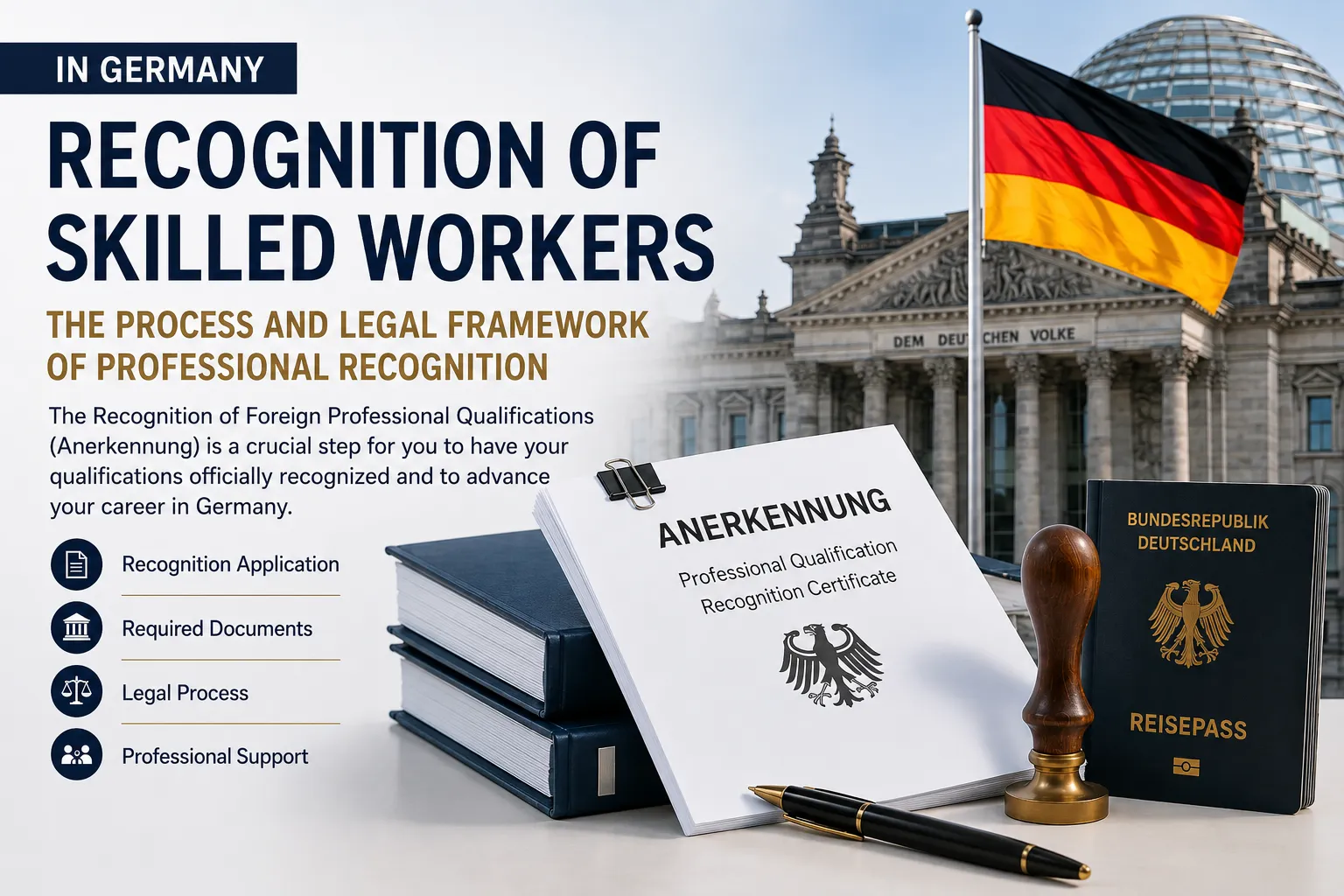
Skilled Immigration and Recognition (Anerkennung) Process in Germany
Germany has introduced modern immigration regulations such as the Skilled Immigration Act (Fachkräfteeinwanderungsgesetz) and the Opportunity Card (Chancenkarte) to address the growing shortage of qualified professionals.
These regulations have significantly increased professional migration from Türkiye and other non-EU countries to Germany.
One of the most critical steps for working in Germany as a qualified professional is the official recognition of foreign educational and professional qualifications. This process is known as the Recognition Process (Anerkennung).
1. Why Is Recognition Mandatory for Skilled Workers in Germany?
To work in Germany as a qualified professional:
- foreign diplomas must be recognized,
- qualifications must comply with German standards,
- professional competence must be officially approved.
Without recognition, many regulated professions — especially in healthcare and engineering — cannot legally be practiced in Germany.
2. Which Authorities Handle the Recognition Process in Germany?
Recognition applications are handled by different institutions depending on the profession:
- ZAB (Central Office for Foreign Education)
- IHK (Chamber of Industry and Commerce)
- State Health Authorities
- Professional Chambers in German federal states
Submitting applications to the wrong authority may cause serious delays.
3. Common Mistakes in the Recognition Process
The most common problems include:
- incomplete or incorrect documents,
- inaccurate translations,
- applications submitted to the wrong institution,
- failure to respond to official requests on time,
- insufficient explanation of curriculum differences.
These mistakes may lead to partial recognition or rejection.
4. Recognition Requirements for Regulated Professions
Certain professions in Germany are subject to stricter recognition requirements:
- Medical doctors
- Dentists
- Nurses
- Engineers
- Pharmacists
Authorities carefully review educational content, internship periods, training hours, and professional qualifications.
5. Curriculum and Terminology Differences
There may be significant differences between Turkish and German education systems regarding:
- course content,
- academic terminology,
- practical training hours,
- internship requirements,
- technical standards.
Failure to properly explain these differences can create risks during the recognition process.
6. Importance of Legal Representation
Professional legal representation provides significant advantages:
- correct application strategy,
- professional communication with authorities,
- deadline management,
- handling additional document requests,
- filing objections (Widerspruch) against negative decisions.
Legal support can be especially important in complex recognition procedures.
7. International Legal Support and Power of Attorney Process
International law firms such as CEKA Legal & Consulting may manage the process through legal representation:
- preparation of application files,
- communication with German institutions,
- management of missing documents,
- objection and appeal procedures.
This structure helps applicants complete the process more efficiently and securely.
Conclusion
Skilled immigration to Germany is not merely a visa application process. It is also a highly technical and legal recognition procedure requiring strategic planning and proper documentation.
Successful immigration as a qualified professional largely depends on:
- proper recognition of qualifications,
- selecting the correct authority,
- submitting complete documentation,
- receiving professional legal guidance.
A professionally managed process can significantly reduce risks and shorten application timelines.
FAQ – Skilled Immigration to Germany
What is the Germany Skilled Immigration Act?
The Skilled Immigration Act regulates the immigration of qualified professionals from non-EU countries to Germany.
What does recognition (Anerkennung) mean in Germany?
Recognition is the official confirmation that a foreign degree or professional qualification is equivalent to German standards.
What is the Opportunity Card (Chancenkarte)?
The Opportunity Card is a points-based residence permit allowing qualified individuals to search for jobs in Germany.
Is German language proficiency mandatory?
It depends on the profession. Many regulated professions require German language skills.
How long does the recognition process take?
The process usually takes between 1 and 6 months depending on the profession and federal state.
Can I move to Germany without a job offer?
Yes. The Opportunity Card and certain job-seeker visas allow applicants to enter Germany without a prior job contract.
Which professions are most in demand in Germany?
Healthcare, IT, engineering, nursing, construction, and technical professions are among the most demanded sectors.
Is legal assistance necessary during the process?
Legal support is highly recommended, especially in complex or rejected cases.
Which documents are generally required?
Diplomas, transcripts, passport copies, CVs, language certificates, and employment contracts (if available).
Can rejected applications be appealed?
Yes. Applicants may file objections or appeals against negative recognition decisions.