
'/%3E%3C/svg%3E)



How can we help you?
You can give us a call.
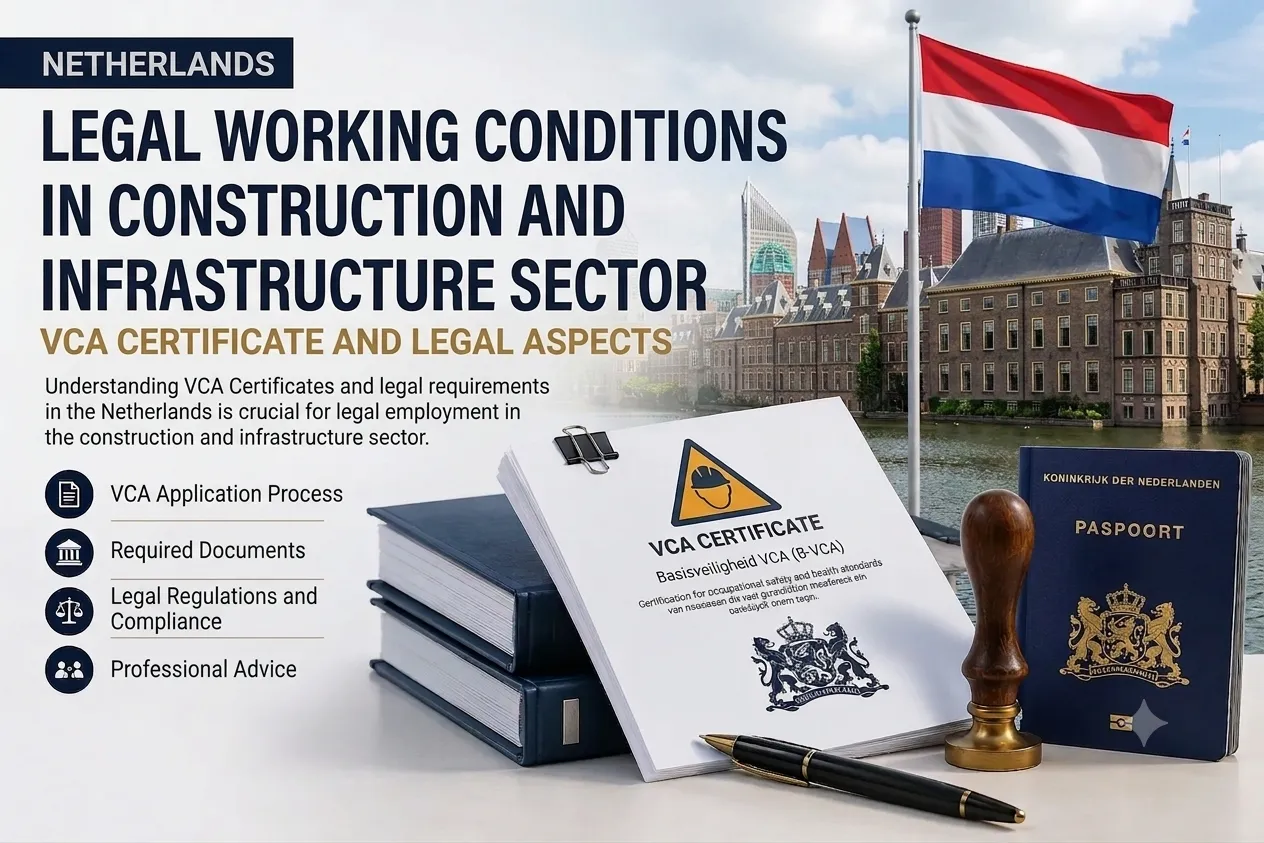
Legal Requirements for Working in the Dutch Construction and Infrastructure Sector: The VCA Certificate and Its Legal Importance
The Netherlands is recognised as one of Europe’s leading destinations for infrastructure development, industrial projects, and international employment opportunities. However, Dutch employment legislation, particularly the Working Conditions Act (Arbowet), requires both employees and contractors operating in high-risk industries to comply with strict occupational health and safety regulations. One of the primary ways of demonstrating compliance with these legal requirements is by obtaining a VCA Certificate.
This article explains what the VCA Certificate is, how the certification process works, and why it plays an important role not only in workplace safety but also in Dutch immigration procedures, including work permit and residence permit applications.
What Is the VCA Certificate (VGM Checklist Aannemers)?
The VCA Certificate (VGM Checklist Aannemers – Safety, Health and Environmental Checklist for Contractors) is an officially recognised occupational health and safety qualification required in high-risk industries throughout the Netherlands, particularly in construction, infrastructure, petrochemical, and industrial sectors.
Under Dutch legislation, principal contractors and employers are responsible for ensuring that everyone working on their sites, including subcontractors, understands and complies with applicable health and safety regulations. The VCA Certificate provides official evidence of this competence and helps reduce workplace accidents and occupational illnesses.
Take the VCA Exam in Turkish – No Need to Travel to the Netherlands
To support the integration of international workers into the Dutch labour market, the VCA certification system offers considerable language flexibility. There is no requirement to speak Dutch in order to take the VCA examination.
Candidates may sit the examination in their native language, including Turkish. Furthermore, it is not necessary to travel to the Netherlands to obtain the certificate. The examination can be taken through authorised examination centres in Turkey, allowing both employers and employees to complete this important legal requirement before commencing work in the Netherlands.
Validity Period and the Central Diploma Register (CDR)
After successfully passing the examination, the VCA Basic Certificate remains valid for ten years.
One of the key advantages of the certification is its official verification process. Every issued certificate is recorded in the Central Diploma Register (CDR), enabling Dutch employers and regulatory authorities to verify its authenticity and validity quickly and securely whenever required.
The Role of the VCA Certificate in Dutch Immigration and Residence Permit Procedures
The VCA Certificate is far more than a workplace safety qualification. It also plays an important role in Dutch immigration procedures and the legal integration of foreign workers and international businesses.
When applying for a Dutch work permit or residence permit, the Dutch Immigration and Naturalisation Service (IND) carefully assesses whether applicants comply with the legal requirements applicable in the Netherlands.
Submitting recognised qualifications such as the VCA Certificate demonstrates an applicant’s commitment to meeting Dutch legal and safety standards while strengthening the credibility of the overall application.
Particularly in Rotterdam and across the Netherlands, where international business activities and large-scale construction projects are common, compliance with Dutch legislation is of significant importance. Supporting documentation such as the VCA Certificate contributes to a transparent and legally compliant application process. Likewise, ensuring that employment documentation, contractual arrangements, and residence permit applications fully comply with Dutch legal requirements provides a solid foundation for successful business operations and immigration procedures.