



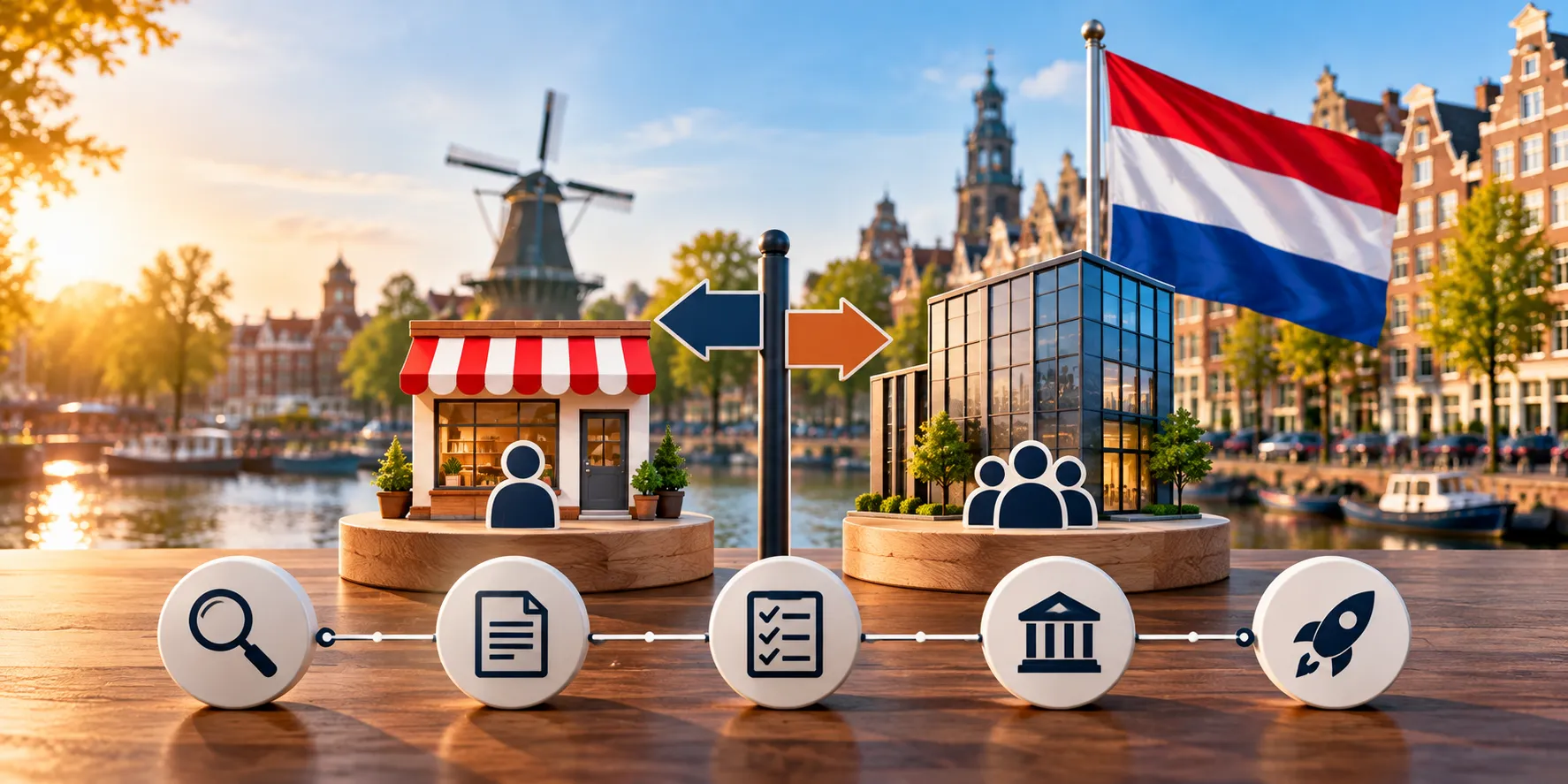
Starting a Business in the Netherlands: Eenmanszaak or BV? 5 Essential Steps
The Netherlands offers entrepreneurs several opportunities to establish and develop a business. For Turkish nationals looking to enter the Dutch market, choosing the appropriate legal structure, registering with the Chamber of Commerce, and understanding tax obligations are particularly important.
If you want to start a business in the Netherlands, you should consider more than the initial setup costs. Personal liability, ongoing administration, accounting requirements, and your residence and employment status may also affect your decision.
1. Eenmanszaak or BV: Which Business Structure Is Right for You?
When you start a business in the Netherlands, two legal structures are commonly considered: the Eenmanszaak and the BV. Both have different legal, tax, and administrative characteristics.
| Criteria | Eenmanszaak | BV |
|---|---|---|
| Legal structure | Sole proprietorship | Private limited company under Dutch law |
| Formation process | Generally straightforward registration with the KvK | Generally established through a civil-law notary |
| Liability | The business owner is generally personally liable | The company is generally liable, although exceptions may apply |
| Administration | Often simpler and less expensive | Usually involves more extensive accounting and filing obligations |
| Suitable for | Many smaller self-employed activities | Businesses with higher commercial risks or particular growth plans |
An Eenmanszaak can be attractive to entrepreneurs who want to start working independently. A BV may be more suitable when a corporate structure and a generally separate liability framework are desired. The appropriate choice should be based on your personal and business circumstances.
2. Starting a Business in the Netherlands: The 5 Steps
Step 1: Define Your Business Idea and Choose a Legal Structure
Define your business activities, target audience, expected revenue, and anticipated expenses. Then assess whether an Eenmanszaak or a BV is appropriate for your plans.
If you want to start a business in the Netherlands, you should also check whether your planned activities require specific permits, professional qualifications, or insurance coverage.
Step 2: Prepare Your Business Address and Documents
Registration requires information about both the entrepreneur and the business. This may include identification documents, a business address, details of the planned activities, and other supporting documents.
The exact requirements depend on the legal structure and your individual circumstances. Foreign founders may be asked to provide additional documentation.
Step 3: Register with the Kamer van Koophandel (KvK)
The Kamer van Koophandel is the Dutch Chamber of Commerce. Businesses are entered into the Dutch Business Register in accordance with the applicable requirements.
Before registering, check the current registration procedure, appointment requirements, and applicable fees on the official website of the Kamer van Koophandel (KvK).
Step 4: Organise Tax Registration and Accounting
After registering your business, you must review your tax obligations. Depending on your activities and legal structure, these may include VAT, personal income tax, corporate income tax, and other reporting requirements.
If you want to start a business in the Netherlands, organise your bookkeeping from the beginning and establish which tax returns you need to submit.
Step 5: Start Operating Your Business
Once the necessary registrations have been completed, you can organise your ongoing business operations. These may include business banking, invoicing, contracts, insurance, and appropriate accounting processes.
Before starting your activities, also check whether your personal circumstances require additional residence or work authorisation.
3. Which Documents Are Required?
If you want to start a business in the Netherlands, you should prepare the required documents in advance. The exact list depends on your legal structure, business activities, and personal circumstances.
- A valid passport or another accepted form of identification
- Details of the business address
- A description of the planned business activities
- The entrepreneur's contact details
- Additional supporting documents, if required for your specific application
- For a BV: the information and documents required for the notarial incorporation process
Check with the relevant authority in advance to determine whether documents must be translated, certified, or submitted in a particular format. Do not rely solely on a general checklist if your personal circumstances may trigger additional requirements.
4. How Much Does It Cost to Start a Business in the Netherlands?
The cost of starting a business in the Netherlands varies according to the legal structure and your individual needs. In addition to registration fees, you may need to budget for notarial services, accounting, professional advice, insurance, and business premises.
| Cost Item | Eenmanszaak | BV |
|---|---|---|
| Registration | Fee according to the current KvK fee schedule | Fee according to the current KvK fee schedule |
| Notary | Not required for the usual formation process | Generally required |
| Accounting | Depends on the workload and service provider | Depends on the workload and service provider |
| Tax advice | Optional; may be useful depending on your circumstances | Optional; may be useful depending on your circumstances |
| Other expenses | For example, insurance or business premises | For example, insurance, business premises, and additional administration |
Check the current official fee schedules before establishing your business. Your total costs will depend, among other things, on whether you need professional assistance, rent office space, or require a notarial incorporation process.
You can find current information about registration in the Business Register directly through the KvK. For tax-related questions, the Dutch Tax Administration, Belastingdienst, is an important official source.
5. Residence and Self-Employment Requirements for Turkish Nationals
Establishing a business and obtaining the right to reside in a country are two separate matters. Turkish nationals who want to start a business in the Netherlands should therefore separately check which residence and work authorisations may be required in their particular circumstances.
Registering a company does not automatically give someone the right to live or work in the Netherlands. The applicable requirements may depend on nationality, residence status, and the intended business activities.
Information about residence procedures and the applicable requirements is available from the Dutch Immigration and Naturalisation Service (IND). Consult its official website: IND – Immigration and Naturalisation Service.
6. Can You Change from an Eenmanszaak to a BV Later?
Yes. Changing your business structure at a later stage may be possible under certain conditions. Whether switching from an Eenmanszaak to a BV is appropriate depends on factors such as revenue, liability risks, tax circumstances, and future business objectives.
If you initially start a business in the Netherlands as a sole proprietor, you should regularly review how your business develops. As your business grows, it may become appropriate to reassess your legal structure.
A change should not be based solely on reaching a particular revenue level. The legal, tax, and administrative consequences should be evaluated in light of your individual circumstances before making a decision.
7. What Obligations Apply After Registration?
Once your business is registered, ongoing administration begins. If you want to start a business in the Netherlands, you should establish reliable processes to meet your continuing obligations from the outset.
- Maintain proper business records and accounting documentation.
- Submit required tax returns by the applicable deadlines.
- Keep invoices and supporting business documents.
- Report changes to business information to the relevant authorities.
- Check whether insurance or specific permits are required.
- If you employ staff, comply with the applicable employment law and administrative requirements.
Your specific obligations depend on the legal structure, business activities, and individual circumstances. For example, a BV has different corporate governance and accounting requirements from an Eenmanszaak.
8. When Is Professional Advice Useful?
Professional advice can be particularly useful when several legal structures are possible, you plan to establish your business from abroad, or you have questions about residence requirements.
An individual assessment may also help prevent mistakes involving tax considerations, cross-border business activities, or a planned future conversion to a BV.
You can learn more about our services on our About Our Law Firm page. If you have specific legal questions, you can contact us through our Contact Us page.
Frequently Asked Questions (FAQ)
Can I establish a company in the Netherlands as a Turkish national?
The possibility of establishing a company and the right to live or work in the Netherlands must be assessed separately. The relevant registration requirements and your individual legal circumstances are important factors.
Which is better: an Eenmanszaak or a BV?
An Eenmanszaak is often simpler to administer. A BV may be more appropriate for certain business risks or growth plans. The right choice depends on your individual circumstances.
Do I need a notary to establish a company?
A notary is generally required to establish a BV. An Eenmanszaak is usually registered without a notarial incorporation process.
How long does it take to establish a business?
The time required depends on the legal structure, the completeness of your documents, appointment availability, and any additional checks. Contact the relevant authority for information about the current procedure.
Will establishing a business automatically give me a residence permit?
No. Registering a business does not automatically establish a right to reside in the Netherlands. Residence requirements must be assessed separately.
Where can I find official information about establishing a business?
Information about Business Register registration is available from the KvK. Tax information is available from the Belastingdienst, while residence-related information is provided by the IND.
Planning to Start a Business in the Netherlands?
Before establishing your business, review the appropriate legal structure, the required documentation, and any potential residence-related questions. An individual assessment can help identify the next steps for your particular circumstances.
Official Information Sources
- Kamer van Koophandel (KvK) – Business Register and company registration
- Belastingdienst – Tax information
- Immigration and Naturalisation Service (IND) – Residence-related information
Legal disclaimer: This article is provided for general informational purposes only and does not constitute individual legal or tax advice. Requirements, fees, and procedures may change. Check the latest official information and seek professional advice about your specific circumstances where necessary.